The best lightweight running watches give you essential training data without weighing down your wrist. This roundup compares 10 options across GPS tracking, workout guidance, health features, battery life, and price.
Whether you want a focused GPS watch for daily miles or a smartwatch for all-day activity tracking, use the guide below to narrow your choices by running goals and budget.
Best 10 Lightweight Running Watches Picks for 2026
Lightweight Training Pick

- 30g nylon-band design and slim 11.7mm profile
- Up to 38 hours of continuous GPS tracking
- Dual-frequency GPS with route and breadcrumb navigation
Best For: Runners seeking a light, endurance-focused training watch
Coaching-Focused Pick

- Built-in GPS and wrist-based heart rate
- Adaptive Garmin Coach and daily workout suggestions
- AMOLED touchscreen with button controls
Best For: Runners following structured training and recovery plans
Premium Ultralight Pick

- 32g nylon-band weight and 11.8mm thickness
- AMOLED display with auto-adjusting brightness
- Up to 41 hours of GPS use plus voice training tools
Best For: Runners wanting a light, feature-rich AMOLED training watch
Everyday Running Pick

- Lightweight 43mm design with AMOLED touchscreen
- Adaptive workouts and Garmin Coach race plans
- GPS, recovery tracking, notifications, and Garmin Pay
Best For: Everyday runners wanting guided training and smartwatch features
Lightweight Running Specialist

- 37 g design with built-in GPS for pace and route tracking
- Suggested workouts and PacePro help guide training
- Up to 20 hours of GPS use and two weeks in smartwatch mode
Best For: Dedicated runners and structured GPS training
Full-Feature Fitness Choice

- AMOLED display, built-in GPS, and up to 11 days of battery
- Tracks sleep, Body Battery, stress, heart rate, and recovery
- Supports 30+ sports apps and downloadable music
Best For: Multisport users wanting wellness and smartwatch features
Best Value Pick

- Lightweight 37 g design
- Up to 20 hours of GPS battery
- Suggested workouts and PacePro guidance
Best For: Budget-conscious runners wanting core GPS and training features
Simple Training Choice

- Lightweight 37 g body
- Multi-satellite GPS support
- Free plans from 5K to half marathon
Best For: Recreational runners seeking guided training and everyday tracking
Premium Lightweight Pick
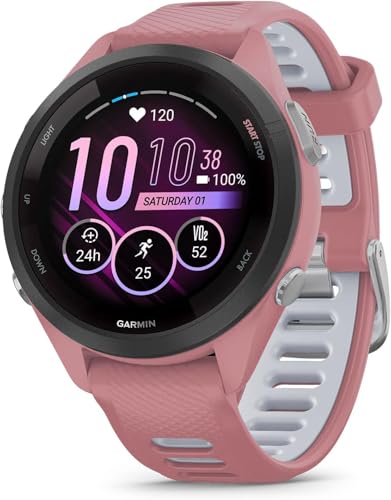
- Compact 42 mm, 39 g design
- AMOLED display with buttons
- Advanced readiness and recovery insights
Best For: Serious runners and multisport athletes wanting advanced metrics
Lightweight Training Pick – COROS PACE 3 GPS Sport Watch
The COROS PACE 3 is a practical choice among lightweight running watches, combining a 30g nylon-band design with accurate dual-frequency GPS and a battery rated for up to 38 hours of continuous GPS tracking. Its slim profile and broad activity support also make it suitable for everyday training beyond running.
Best For: Runners who prioritize low weight, long battery life, route navigation, and reliable GPS tracking.
Pros:
- Very light 30g design with an 11.7mm profile for comfortable all-day wear.
- Dual-frequency GPS is designed to improve track accuracy in challenging urban environments.
- Up to 38 hours of continuous GPS tracking or 24 days of daily use.
- Supports route planning, breadcrumb navigation, and numerous sports modes.
Cons:
- The display is an LCD transflective touchscreen rather than an AMOLED panel.
- Some navigation and connected features require the COROS app and a compatible smartphone.
Choose the PACE 3 if comfort and endurance matter more than flashy display technology. It offers a focused running experience with strong GPS, useful navigation, and enough versatility for multisport training.
Coaching-Focused Pick – Garmin Forerunner 70
The Garmin Forerunner 70 is an easy-to-use option in the lightweight running watches category, with built-in GPS, wrist-based heart rate, an AMOLED touchscreen, and traditional button controls. Its adaptive coaching and recovery features make it useful for runners following a structured plan.
Best For: Runners who want adaptive training guidance, recovery insights, and a bright touchscreen in a lightweight design.
Pros:
- Built-in GPS tracks pace and distance while wrist-based heart rate supports workout monitoring.
- Garmin Coach and daily suggested workouts adapt to performance and recovery.
- AMOLED touchscreen combines with button controls for flexible operation.
- Offers up to 23 hours of GPS mode battery life and more than 80 activity profiles.
Cons:
- Some safety and live-tracking features require a paired smartphone and network coverage.
- The supplied details do not specify an exact item weight.
The Forerunner 70 is a strong fit for runners who want more than basic tracking. Its coaching, sleep, recovery, and training-readiness tools can help turn daily workouts into a more organized training routine.
Premium Ultralight Pick – COROS PACE 4 GPS Watch
The COROS PACE 4 stands out among lightweight running watches with a 32g nylon-band weight, 11.8mm thickness, and a higher-resolution AMOLED display. It adds voice tools, dual-button-and-crown controls, and detailed recovery tracking while maintaining up to 41 hours of GPS use.
Best For: Runners who want an ultralight watch with a vivid AMOLED screen, long GPS battery life, and expanded training tools.
Pros:
- 32g nylon-band design is light enough for continuous wear.
- AMOLED touchscreen offers vibrant color, auto-adjusting brightness, and higher resolution than the PACE 3.
- Provides up to 41 hours of continuous GPS use and up to 19 days of daily battery life.
- Voice recording, voice control, recovery metrics, and customizable controls add training flexibility.
Cons:
- Its feature-rich interface may be more than runners who only need basic GPS and pace data.
- Several connected functions rely on the COROS app and smartphone compatibility.
For runners who value a modern display without giving up low weight, the PACE 4 is an appealing upgrade. Its battery, control options, and training-and-recovery hub make it well suited to frequent or detailed training.
Everyday Running Pick – Garmin Forerunner 165
The Garmin Forerunner 165 is a straightforward choice among lightweight running watches, pairing a 43mm lightweight design with built-in GPS, wrist-based heart rate, and a bright AMOLED touchscreen. It also includes adaptive workout suggestions, recovery tools, notifications, and Garmin Pay.
Best For: Everyday runners who want guided workouts, health insights, and smartwatch conveniences in a compact design.
Pros:
- Lightweight 43mm design with both touchscreen and traditional button controls.
- Daily suggested workouts and Garmin Coach plans adapt to performance and recovery.
- AMOLED display, built-in GPS, wrist-based heart rate, and more than 25 activity profiles.
- Supports safety features, smartphone notifications, and Garmin Pay.
Cons:
- GPS battery life is rated at up to 19 hours, less than the COROS options listed here.
- Safety and assistance features require setup, a compatible smartphone, and network coverage.
The Forerunner 165 balances running essentials with useful daily smartwatch features. It is a sensible pick for runners who want an approachable training watch that also tracks sleep, recovery, stress, and everyday activity.
Everyday Health Pick – D26E Fitness Tracker
For shoppers seeking lightweight running watches for casual workouts and daily activity tracking, this fitness tracker combines multiple sports modes with health and sleep features. It uses smartphone GPS for outdoor route tracking and works with Android and iPhone devices.
Best For: Everyday fitness tracking, casual runners, and users who want broad wellness features in a lightweight band-style watch.
Pros:
- Tracks heart rate, blood oxygen, sleep stages, steps, calories, distance, and speed.
- Includes running, swimming, basketball, football, and other sports modes.
- Offers over 200 watch faces, notifications, music and camera controls, and weather updates.
- IP68 water resistance and a detachable 16mm silicone strap support daily wear.
Cons:
- GPS route tracking requires syncing with a smartphone rather than built-in GPS.
- The listed blood pressure and other health metrics are wellness features, not a substitute for medical equipment.
This is a practical choice if you want a compact activity tracker with extensive wellness monitoring and smart conveniences. Dedicated runners who want phone-free GPS training may prefer a watch with built-in GPS.
Lightweight Running Specialist – Garmin Forerunner 55
The Garmin Forerunner 55 is one of the more focused lightweight running watches in this lineup. At 37 g, it pairs built-in GPS with wrist-based heart-rate monitoring, running guidance, and up to two weeks of smartwatch battery life.
Best For: Runners who want dedicated GPS training tools, suggested workouts, and long battery life in a lightweight design.
Pros:
- Built-in GPS tracks distance, pace, and route without relying on phone GPS.
- Provides daily suggested workouts, race time predictions, finish-time estimates, and PacePro guidance.
- Offers up to two weeks in smartwatch mode and up to 20 hours in GPS mode.
- Weighs 37 g and supports running, cycling, swimming, HIIT, Pilates, and other activities.
Cons:
- PacePro is not compatible with on-device courses.
- The 1.04-inch transflective display is smaller and less colorful than an AMOLED screen.
Choose the Forerunner 55 when running performance matters more than smartwatch extras. Its low weight, dedicated training features, and built-in GPS make it especially well suited to structured run training.
Full-Feature Fitness Choice – Garmin vívoactive 5
The Garmin vívoactive 5 suits shoppers who want lightweight running watches with a broader smartwatch and wellness feature set. Its 42mm case includes built-in GPS, a bright AMOLED display, extensive health tracking, and up to 11 days of smartwatch battery life.
Best For: Fitness users who want running and GPS tools alongside detailed wellness tracking, music, and a colorful touchscreen.
Pros:
- Bright AMOLED display and up to 11 days of smartwatch battery life, or up to five days with the display always on.
- Built-in GPS and more than 30 indoor and GPS sports apps, including running, cycling, swimming, golf, and HIIT.
- Offers Body Battery, sleep score, sleep coaching, nap detection, stress tracking, heart-rate monitoring, and recovery insights.
- Supports downloaded Spotify, Amazon Music, or Deezer playlists for phone-free listening with wireless headphones.
Cons:
- Its broader feature set may be more than casual runners need.
- Health and wellness metrics are estimates intended for general tracking.
The vívoactive 5 is a strong all-around option for people who alternate between running, gym sessions, and daily wellness tracking. It adds a more colorful touchscreen and music support while retaining built-in GPS and training features.
Best Value Pick – Forerunner 55 Renewed
The renewed Garmin Forerunner 55 is a practical choice for runners seeking lightweight running watches with straightforward GPS tracking, wrist-based heart-rate monitoring, and helpful training guidance. At 37 g, it keeps the focus on core running metrics without adding unnecessary bulk.
Best For: Budget-conscious runners who want reliable training tools and long smartwatch battery life.
Pros:
- Lightweight 37 g design with button controls.
- Tracks distance, pace, route, and wrist-based heart rate using GPS.
- Up to 2 weeks in smartwatch mode and up to 20 hours in GPS mode.
- Includes suggested workouts, PacePro guidance, race predictions, and multiple activity profiles.
Cons:
- Renewed item includes a 90-day limited warranty.
- PacePro is not compatible with on-device courses.
- Uses a 1.04-inch MIP display rather than a colorful AMOLED screen.
Choose this model if you value simple operation, extensive battery life, and useful run-planning features over a premium display. Its compact, lightweight build makes it a strong everyday training companion.
Simple Training Choice – Forerunner 55 GPS
The standard Garmin Forerunner 55 delivers a lightweight running-watch setup for runners who want GPS, heart-rate monitoring, and training plans in an uncomplicated package. Its 37 g body and 50-meter water resistance support everyday workouts across running, cycling, swimming, and more.
Best For: Newer or recreational runners who want guided training without a complicated interface.
Pros:
- Lightweight 37 g construction with button-based controls.
- GPS, GLONASS, and Galileo support help track position and distance.
- Offers suggested training, free 5K, 10K, and half-marathon plans, PacePro, and recovery time.
- Up to 20 hours of battery life and 50-meter water resistance.
Cons:
- Display and specifications listed in the supplied details are inconsistent, so buyers should verify the exact configuration.
- Does not offer the AMOLED display or advanced readiness features associated with the Forerunner 265S.
This Forerunner 55 is a sensible pick when guided plans and dependable activity tracking matter more than advanced training analytics. Verify the listing details before purchase, particularly the display specifications.
Premium Lightweight Pick – Forerunner 265S 42mm
The renewed Garmin Forerunner 265S combines a lightweight 42 mm design with a colorful AMOLED touchscreen, traditional buttons, and advanced training insights. It is one of the more capable lightweight running watches for runners who want detailed readiness, recovery, and race-planning data in a smaller case.
Best For: Serious runners and multisport athletes who want advanced metrics in a compact watch.
Pros:
- 42 mm design weighs 39 g and fits wrists from 115–178 mm.
- Bright AMOLED touchscreen works alongside traditional button controls.
- Provides training readiness, HRV status, sleep insights, training status, and adaptive daily workouts.
- Multi-band GNSS with SatIQ supports positioning in challenging environments, while battery life reaches up to 15 days in smartwatch mode and 24 hours in GPS mode.
Cons:
- Renewed condition may not suit shoppers seeking a new device.
- Several safety and smart features require a compatible smartphone, setup, and network coverage.
- Its broader feature set may be more than casual runners need.
The Forerunner 265S is the strongest option here for athletes who want a compact watch with a premium display and deeper training feedback. Consider it when advanced insights and multisport support justify moving beyond the simpler Forerunner 55 models.
How We Picked the Best Lightweight Running Watches
We focused on watches that balance low-profile comfort with useful running features. The selection includes dedicated GPS running watches, multisport models, health-focused smartwatches, and lower-cost fitness trackers. We considered GPS availability, workout and training tools, heart-rate tracking, battery expectations, display usability, water resistance, compatibility, and overall value.
Because “lightweight” can refer to both the watch body and its strap, check the listed configuration carefully. Nylon and silicone bands can change comfort and total weight, while case size affects how the watch feels during long runs or sleep.
Quick Comparison
- Best for focused running: COROS PACE models and Garmin Forerunner watches prioritize training data, GPS, and battery efficiency.
- Best for a running smartwatch: Garmin Forerunner 165 and vívoactive 5 add brighter interfaces and broader everyday features.
- Best for budget-conscious buyers: The Forerunner 55 options offer core GPS training features without flagship pricing.
- Best for smaller wrists: Compact models such as the Forerunner 265S and 42mm vívoactive 5 may provide a more comfortable fit.
- Best for basic wellness tracking: The general fitness tracker covers steps, sleep, and health metrics, but may offer less dependable running analysis than established GPS brands.
Key Buying Factors for Lightweight Running Watches
Weight, Fit, and Case Size
A comfortable fit matters more than a small number on the specification sheet. Look for a secure strap, a case that does not press into your wrist, and enough adjustment for movement. Smaller cases can be especially helpful for petite wrists, but they may use smaller screens or batteries.
GPS and Running Accuracy
Dedicated GPS watches are generally the better choice for pace, distance, route recording, and structured training. If you run near tall buildings, under tree cover, or in areas with weak signal, prioritize a model with reliable satellite support and consistent workout recording.
Training Features and Sensors
Decide whether you need simple pace and distance data or more advanced tools such as suggested workouts, recovery guidance, training load, multisport modes, and interval support. Wrist-based heart-rate tracking is convenient, but serious athletes may also want compatibility with external sensors.
Battery and Everyday Use
Compare both smartwatch and GPS workout battery claims. Frequent GPS use, notifications, music, bright displays, and health sensors can reduce real-world runtime. A longer-lasting watch means fewer charging interruptions during training blocks or travel.
Smartwatch and Health Functions
Features such as notifications, sleep tracking, step counts, blood oxygen readings, and payments can make a watch more useful outside running. Treat blood pressure and similar wellness readings as estimates unless the device is specifically validated for medical use.
Who Should Buy Which Lightweight Running Watches?
Choose a COROS PACE model if light weight, long battery life, and focused training are your top priorities. Choose a Garmin Forerunner 55 if you want a straightforward entry-level GPS running watch with guided workouts. The Forerunner 165 is a stronger fit for runners who value a modern display and broader smartwatch functionality, while the 265S suits smaller wrists and more advanced training needs.
The vívoactive 5 is better for buyers who split time between running, general fitness, and everyday wellness. A basic fitness tracker can work for casual activity monitoring, but runners who depend on accurate routes, pace, and structured workouts should stay with a dedicated GPS model. Finally, renewed watches can offer excellent value, provided you verify battery condition, warranty coverage, seller reputation, and return terms before buying.