Photo editing is easier when your canvas, layers, tools, and reference images have room to stay visible. The best laptop screen extenders for photo editing add that workspace without requiring a permanent desktop setup.
We’ve rounded up 10 portable dual- and triple-screen options in common 14.1- and 15.6-inch sizes, then outlined the key specifications to check before buying.
Best 10 Laptop Screen Extenders for Photo Editing Picks for 2026
Best Adjustable Editing Companion

- 15.6-inch FHD IPS screen
- Adjustable stand with 90° rotation
- Supports VESA mounting and five modes
Best For: Photographers who need flexible positioning and a large secondary display
Best Compact Flexible Option
Funhill 14.1-inch FHD Extender

- Compact 14.1-inch FHD IPS display
- Rotates up to 280 degrees
- Includes multiple connection cables
Best For: Mobile photographers needing a versatile compact second screen
Best Lightweight Travel Pick
Blackview DCM6 Pro 14.1-inch Monitor

- Approximately 2-pound portable design
- One-cable USB-C connection on compatible devices
- Stated 100% sRGB with TÜV eye care
Best For: Traveling photographers who prioritize low weight and simple setup
Best Compact Choice
APILDELLA 14-Inch FHD Screen Extender

- 14-inch 1080p IPS display with HDR support
- Fits 13- to 16-inch laptops and folds for travel
- Extended and mirrored modes with adjustable image controls
Best For: Compact photo-editing workstations and frequent travelers
Best Triple-Screen Setup
15.6-Inch P7 Portable Monitor Extender
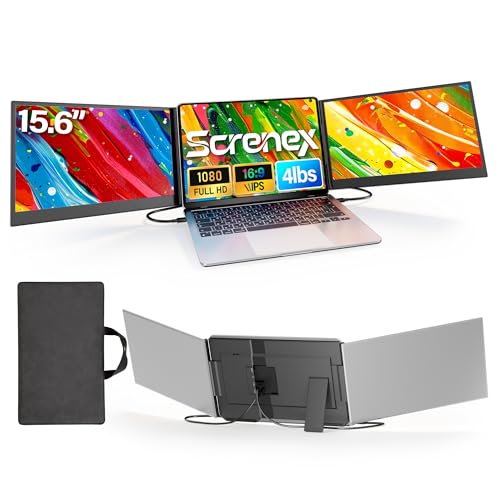
- Two 15.6-inch 1080p IPS panels for a triple-screen workspace
- Free-standing design avoids laptop-screen clamping
- Includes cables, power adapter, and carrying case
Best For: Editors needing extensive workspace for tools and image previews
Best Flexible Editing Monitor
Wixzet 15.6-Inch Detachable Extender

- 15.6-inch 1080p IPS panel with stated 100% sRGB coverage
- Supports portrait, mirrored, extended, and standalone use
- Includes adjustable stand and 100W PD reverse charging support
Best For: Photo editors wanting flexible layouts and a detachable second display
Best Color-Gamut Pick
APILDELLA 15.6-inch Triple Screen Extender
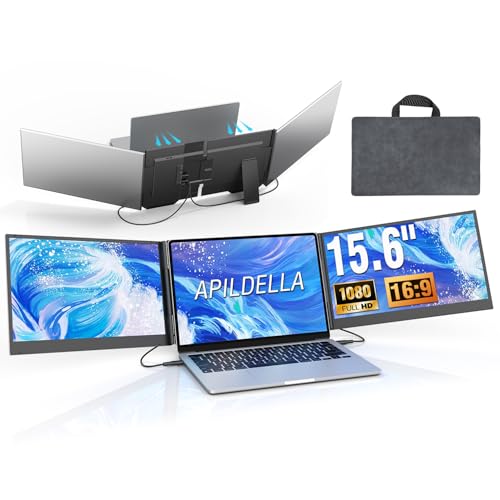
- 15.6-inch 1080p IPS display with HDR
- Stated 120% sRGB color gamut
- Two-cable setup and travel bag included
Best For: Photographers wanting a large, color-focused portable display
Best for Mobile Workflows
Synnov 15.6-inch Triple Monitor Extender

- 15.6-inch 1080p IPS display
- 178-degree viewing angle and adjustable brightness
- Lightweight aluminum build with carry bag
Best For: Traveling photographers and remote creative workflows
Best Triple-Screen Color Coverage – KEFEYA 15.6-inch FHD Triple Monitor
For photo editors who want more workspace without giving up color coverage, the KEFEYA is one of the more capable laptop screen extenders for photo editing. It uses two 15.6-inch FHD IPS displays with a stated 100% sRGB gamut, while its foldable design supports portable triple-screen workflows.
Best For: Photo editors who need a large, portable triple-monitor setup and broad workspace for editing tools, previews, and reference images.
Pros:
- Two 15.6-inch 1920×1080 IPS displays provide substantial additional workspace.
- The stated 100% sRGB coverage is useful for color-conscious photo work.
- Supports landscape, portrait, mirror, and extended display modes.
- Includes cables and folds into a portable design with a leather bag.
Cons:
- At about 3.9 to 4 pounds, it is heavier than the smaller single-screen options.
- Mac laptops with M1, M2, or M3 chips require a separate H6 adapter, which is not included.
- Connection requirements vary depending on whether the laptop uses full-featured USB-C or HDMI.
The KEFEYA stands out when screen area and stated sRGB coverage matter more than minimum travel weight. Verify your laptop’s ports before buying, especially if you use a newer Mac.
Best Adjustable Editing Companion – Anyking 15.6-inch FHD Monitor
The Anyking combines a 15.6-inch FHD IPS panel with flexible positioning, making it a practical choice among laptop screen extenders for photo editing. Its adjustable stand, 90-degree rotation, and multiple display modes make it easier to position editing panels or reference material beside your main screen.
Best For: Photographers who want a larger secondary display with adjustable height, portrait orientation, and a simple one-cable USB-C setup when supported.
Pros:
- 15.6-inch 1920×1080 IPS display offers a generous editing workspace.
- 330 cd/m² brightness can help maintain visibility in brighter surroundings.
- Built-in stand supports height adjustment and 90-degree rotation.
- Supports landscape, portrait, mirror, extend, and rotated modes, plus VESA mounting.
Cons:
- Its listed color gamut is stated as 100, but the notes do not specify the color space.
- HDMI connections require a separate USB-A power connection.
- The single-cable setup requires a full-featured USB-C port on the laptop.
This Anyking model is a strong fit if positioning flexibility matters as much as screen size. For color-critical work, confirm the exact gamut specification and your laptop’s USB-C capabilities before relying on it as a primary color reference.
Best Compact Flexible Option – Funhill 14.1-inch FHD Extender
The Funhill offers a smaller 14.1-inch FHD IPS display for photographers seeking laptop screen extenders for photo editing without adding a larger monitor. Its broad device support, 280-degree rotation, and included connection accessories make it a versatile travel-oriented choice.
Best For: Mobile photographers who need a compact second screen for editing palettes, file browsers, timelines, or reference images.
Pros:
- FHD 1920×1080 IPS resolution keeps photo details and interface text clear.
- Supports 0–280-degree rotation plus extend, duplicate, and portrait modes.
- Works with a wide range of Windows, Mac, Chrome, Linux, Android, and gaming devices.
- Includes USB-C, USB-A, HDMI, and adapter cables for flexible setup.
Cons:
- The 14.1-inch panel provides less workspace than the 15.6-inch alternatives.
- HDMI use requires an additional USB-A or USB-C power connection.
- USB-C video requires a full-featured USB-C port with DP or Thunderbolt support.
The Funhill is a sensible portable pick when flexibility and compatibility are priorities. Its smaller screen is easier to carry, but photographers who need a roomy canvas or multiple large panels may prefer a 15.6-inch model.
Best Lightweight Travel Pick – Blackview DCM6 Pro 14.1-inch Monitor
At approximately 2 pounds, the Blackview DCM6 Pro is designed for photographers who carry their editing setup frequently. It combines a 14.1-inch FHD IPS display, one-cable USB-C connectivity, TÜV-certified eye-care features, and a stated 100% sRGB gamut in a notably lightweight package.
Best For: Traveling photographers and remote editors who want a lightweight extra display for editing controls, previews, and multitasking.
Pros:
- About 2 pounds makes it especially easy to carry for business travel or mobile work.
- The stated 100% sRGB gamut and 1920×1080 IPS resolution support detailed, vivid viewing.
- A single USB-C cable can carry video and power on compatible systems.
- TÜV Rheinland and TÜV SÜD certification, flicker-free viewing, and low blue light are designed for longer sessions.
Cons:
- The 14.1-inch display offers less workspace than the 15.6-inch models.
- The supplied details list a 72 color gamut in the specifications, which conflicts with the bullet’s 100% sRGB claim; verify the listing before color-critical work.
- The notes say an initial driver installation takes about one minute, so setup may not be entirely driver-free.
The Blackview is compelling when portability is the deciding factor. Its color specifications should be clarified before purchase, but the low weight and one-cable design make it well suited to mobile editing workflows.
Best Compact Choice – APILDELLA 14-Inch FHD Screen Extender
For photographers who want more room for palettes, folders, or reference images, this 14-inch APILDELLA is a practical option among laptop screen extenders for photo editing. Its 1920×1080 IPS display offers HDR support, adjustable image settings, and a matte finish, while the sliding support arm fits 13- to 16-inch laptops.
Best For: Travelers and editors using compact 13- to 16-inch laptops who need a portable second screen.
Pros:
- 1080p IPS display with HDR support and adjustable brightness, contrast, and backlight.
- Supports extended and mirrored display modes for flexible editing workflows.
- Lightweight design, adjustable 0-225° angle, and included USB-C, USB-A, and HDMI cables.
- Matte screen, low-blue-light features, and a one-year replacement warranty.
Cons:
- Its 14-inch size provides less workspace than larger 15.6-inch alternatives.
- Some connection setups may require external power or a specific cable configuration.
- Compatibility depends on the laptop having suitable USB-C or HDMI ports.
The APILDELLA balances portability and useful display controls without taking up much space. It is a sensible fit for photo editors who value a compact travel setup, though users seeking maximum workspace may prefer a larger extender.
Best Triple-Screen Setup – 15.6-Inch P7 Portable Monitor Extender
This P7 model is designed for photographers who want a large, three-screen workspace for editing tools, image previews, and file management. It uses two 15.6-inch 1080p IPS panels with 178° viewing angles and a free-standing design that avoids hanging from the laptop display.
Best For: Content creators and photo editors who want maximum multitasking space from a portable triple-screen setup.
Pros:
- Two 15.6-inch FHD IPS panels provide a spacious triple-screen workspace.
- 178° viewing angles and stated accurate color reproduction support comfortable viewing.
- Free-standing aluminum-alloy design avoids laptop-screen clamping, scratches, and hinge stress.
- Includes connection cables, power adapter, instructions, and a carrying bag.
Cons:
- At 3.9 pounds, it is heavier and less compact than a single-screen extender.
- Simple two-cable setup requires a laptop with two full-function USB-C ports.
- M1-M3 MacBooks and some laptops require an H5-T cable, HDMI, USB-A power, and driver installation.
The P7 offers the most expansive workspace in this group and its independent stand is reassuring for laptop protection. Before buying, confirm your laptop’s ports, especially if you use a MacBook or need a simpler travel setup.
Best Flexible Editing Monitor – Wixzet 15.6-Inch Detachable Extender
The Wixzet combines a large 15.6-inch display with several placement options, making it one of the more flexible laptop screen extenders for photo editing. Its 1080p IPS panel is listed with 100% sRGB coverage, 280-nit brightness, anti-glare treatment, and support for extended, mirrored, and portrait modes.
Best For: Photographers who want a detachable second monitor, portrait orientation, and broad laptop compatibility.
Pros:
- 15.6-inch 1080p IPS display with stated 100% sRGB coverage and 178° viewing angle.
- Supports extend, mirror, and portrait modes, plus use as a standalone monitor.
- Compatible with laptops from 13 to 17.3 inches and supports USB-C or HDMI connections.
- Adjustable stand, 192° horizontal rotation, and 100W PD reverse charging support.
Cons:
- At 2.75 pounds, it adds noticeable weight to a mobile setup.
- HDMI connections may require USB-A power, and “No Signal” issues can result from insufficient power.
- Actual USB-C compatibility depends on Thunderbolt 3/4 or DisplayPort Alt Mode support.
With its detachable design, portrait mode, and color-focused specifications, the Wixzet is well suited to photographers who want adaptable editing and reference-screen layouts. Its connection requirements are worth checking before purchase.
Best Color-Gamut Pick – APILDELLA 15.6-inch Triple Screen Extender
For photo editors who want more workspace without sacrificing color, the APILDELLA is a strong option among laptop screen extenders for photo editing. Its 15.6-inch 1080p IPS display, HDR support, and stated 120% sRGB gamut are suited to reviewing images, organizing panels, and keeping reference material visible.
Best For: Photographers and creatives who prioritize a large screen and wide stated color gamut.
Pros:
- 15.6-inch 1080p IPS display with HDR and stated 120% sRGB coverage.
- Uses two cables for the dual-monitor connection rather than a more cumbersome four- or five-cable setup.
- Includes a travel bag, power adapter, and connection cables.
- Aluminum construction, 0.16-inch thickness, and 4-pound weight support mobile use.
Cons:
- Compatibility depends on having two full-featured USB-C ports or one full-featured USB-C port plus HDMI.
- M1–M4 MacBooks require the separately specified H5-T solution.
- The glossy finish may be less convenient in brightly lit editing spaces.
Its broad stated color gamut gives it an edge for image-focused work, while the 15.6-inch size provides a comfortable canvas. Confirm your laptop ports and Mac compatibility before ordering.
Best for Mobile Workflows – Synnov 15.6-inch Triple Monitor Extender
The Synnov combines a generous 15.6-inch workspace with a lightweight build, making it a practical choice among laptop screen extenders for photo editing on the move. Its 1080p IPS panel, 178-degree viewing angle, and adjustable brightness can help keep image previews and editing tools accessible while traveling.
Best For: Remote photographers and creators who need a portable triple-screen setup for travel or home-office work.
Pros:
- 15.6-inch 1080p IPS display with HDR and a 178-degree viewing angle.
- Supports extended, mirrored, and portrait modes.
- 4-pound, 0.19-inch-thin aluminum design includes a leather carry bag.
- Plug-and-play setup uses two full-featured USB-C connections or USB-C plus HDMI.
Cons:
- Requires at least one full-featured USB-C port.
- The supplied compatibility note excludes M1/M2/M3 MacBooks because of chip limitations.
- The glossy screen may reflect ambient light during editing.
Synnov is appealing when portability and viewing flexibility matter as much as screen area. Check your laptop’s port configuration carefully, especially if you use a MacBook.
Best Lightweight Option – Macsecor 14-inch Triple Screen Extender
For editors who value a lighter travel setup, the Macsecor offers two 14-inch 1080p IPS screens in a roughly 3-pound design. It is one of the more compact laptop screen extenders for photo editing, with HDR, anti-glare technology, and a blue-light filter for longer viewing sessions.
Best For: Mobile photo editors who want dual external screens while keeping travel weight low.
Pros:
- Two 14-inch 1080p IPS screens in a 0.27-inch-thin design.
- Approximately 3 pounds, with a built-in aluminum stand and 180-degree rotation.
- HDR mode, anti-glare technology, blue-light filter, and 178-degree viewing angle.
- Supports extended, mirrored, portrait, and landscape modes.
Cons:
- Full-featured USB-C or HDMI connectivity is required.
- M1/M2/M3 MacBooks require an additional H5-T cable.
- The smaller 14-inch screens provide less workspace than the 15.6-inch alternatives.
Macsecor is a sensible pick for photographers who regularly work away from a desk and prefer a lighter kit. Its 14-inch panels trade some workspace for portability, so consider how much room your editing interface requires.
How We Picked the Best Laptop Screen Extenders for Photo Editing
We focused on portable extenders that pair with common 13- to 17.3-inch laptops and offer useful workspace for applications such as Lightroom, Photoshop, Capture One, and browser-based editing tools. Our comparison emphasizes screen size, Full HD resolution, IPS panels, connection options, portability, mounting flexibility, and whether a model supports one or two additional displays.
Because compatibility can vary by computer, we also considered the practical setup requirements: USB-C video support, HDMI availability, power needs, operating-system support, and the likelihood that an adapter or second cable will be required.
Quick Comparison
- 15.6-inch models: Best when you want a larger editing canvas and have enough desk or travel-bag space.
- 14.1-inch models: A useful balance of viewing area, weight, and laptop compatibility.
- 1080p Full HD: Suitable for panels, toolbars, references, and general editing workflows, though not a replacement for a high-resolution color-critical monitor.
- Dual- and triple-screen designs: Choose based on whether you need one extra display or two independent extensions.
- Detachable designs: More flexible for changing between presentation, mirror, and extended-screen layouts.
Key Buying Factors for Laptop Screen Extenders for Photo Editing
Resolution and Panel Quality
Full HD is common in this category and keeps text and interface elements reasonably sharp at portable sizes. Look for an IPS panel when possible for more consistent viewing angles. If you edit professionally for print or color-critical delivery, verify color-gamut and calibration specifications rather than assuming every IPS display is equally accurate.
Connections and Power
USB-C is convenient, but the laptop’s USB-C port must support video output through DisplayPort Alt Mode or Thunderbolt. Some laptops use USB-C only for data and charging. HDMI models may need a separate USB cable for power, while triple-screen setups can require multiple ports, drivers, or adapters.
Fit, Weight, and Adjustability
Check the supported laptop-width range and the thickness limits before ordering. A 15.6-inch extender may be a poor fit for a compact laptop even when the advertised diagonal range appears compatible. For frequent travel, compare total weight, thickness, cable storage, kickstand stability, and screen protection.
Workflow Flexibility
Extended mode is generally more useful than mirroring for photo editing because it lets you keep tools or references separate from the main image. Detachable monitors and multiple viewing modes can help when you switch between editing, presentations, and content review.
Who Should Buy Which Laptop Screen Extenders for Photo Editing?
Choose a 15.6-inch model if you want the largest practical secondary canvas for timelines, layers, file browsers, or reference images. Choose a 14.1-inch model if portability and a better fit across smaller laptops matter more than maximum workspace. Choose a triple-screen extender for multitasking-heavy workflows, provided your laptop can supply the required video connections and power. Choose a detachable or multi-mode design if you frequently change between dual-screen editing, presentations, and travel use.
Before buying, confirm your laptop’s operating system, available ports, USB-C video capability, supported screen size, and whether the extender needs drivers or external power. These checks matter more than screen size alone.